


Updated October 15, 2026: Added a new factory short and a carton-to-packing-list reference for brands preparing bulk leggings orders.
Cartons Ready. Can Your Warehouse Identify What Is Inside?
A shipment can have the correct total number of leggings and still take extra work to receive. The missing detail may be the connection between a carton number and the sizes and colours inside it. Before packing starts, agree how the receiving team will identify each box.
The new HF Garments short introduces this receiving question. The reference below is a buyer planning aid, not a record of the quantities or checks completed for the shipment in the video.
A Carton-to-Packing-List Reference
| Reference to agree | Receiving question it answers |
|---|---|
| Carton number and order/style reference | Which box and product does this row describe? |
| Colour and quantities by size | What should be inside this specific carton? |
| Total pieces in the carton | Does the size breakdown add up to the carton total? |
| Unit label and carton mark reference | Can the product, box and packing list be matched? |
| Current version and agreed exceptions | Are both teams following the same instructions? |
If sizes or colours are mixed, record the breakdown explicitly. If cartons use different assortments, identify each one rather than relying on an order-wide total. When an instruction changes, confirm which packing-list version the factory and receiving team should use.
Before sample approval, also confirm whether the packed sample should demonstrate label position or presentation. Our sample version checklist helps distinguish a product reference from a packing instruction.
Planning a bulk leggings order? Share your product reference, estimated quantity per style and colour, destination and available packing instructions through our production review page. Identify any warehouse requirements that still need confirmation.
A finished garment can still create a receiving problem after it leaves the sewing line.
If the wrong size sticker is applied, two colours are mixed in one carton, or the carton quantity does not match the packing list, the buyer may not find the mistake until the shipment reaches a warehouse. By then, correcting it can involve recounting, relabelling or reorganising stock before the products can move to stores or customers.
Packing belongs in the order specification — not in a last-minute message before the truck arrives. The folding method, inner packaging, labels, size and colour assortment, pieces per carton and shipping marks should be confirmed before final packing begins.
This page covers the packing brief you send before cartons are sealed. For what to check during a factory visit, and for keeping packing consistent across reorders, see the linked guides below.
Watch: Why Packing Requirements Belong in the Bulk Order Brief
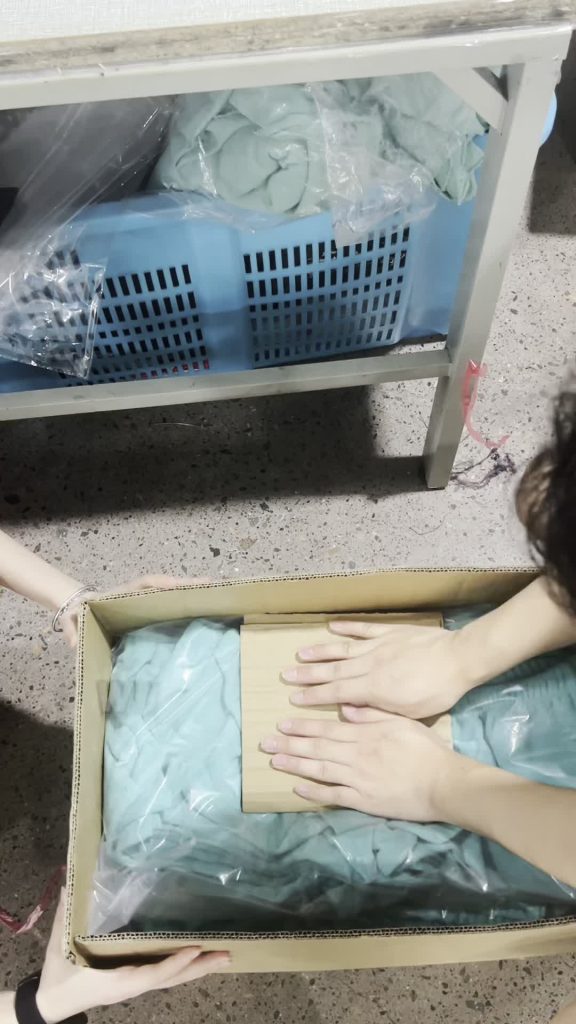
This short shows folded garments being placed into individual bags, packing work at the table and the outbound loading stage at HF Garments.
The footage is useful evidence of real packing activity. It does not, by itself, prove the size ratio, carton count, barcode requirement or shipping mark for a particular buyer’s order. Those details still need an order-specific packing brief and appropriate verification.
What Should Activewear Packing Instructions Include?
Before cartons are sealed, the instructions should define six items: the folding method, inner packing, unit identification such as size labels and barcodes, the size and colour assortment, pieces per carton and the approved carton mark. Each item should match the current order rather than an earlier shipment.
1. How Should Each Garment Be Folded?
Folding affects presentation, packed dimensions and the number of pieces that fit safely in a carton. A long pair of wide-leg pants, a padded sports bra and a lightweight T-shirt should not automatically use the same folding reference.
Provide an approved folding photo, diagram or packed sample when presentation matters. If a retailer requires a particular fold size or visible barcode position, record that too.
2. What Goes Around or Inside the Garment?
State the required inner packaging: individual polybag, recycled-material bag, tissue, protective layer, hanger, insert or another agreed method. Define the bag size and any required warning, ventilation or recycling information for the destination market.
A decorative surface, moulded cup, zipper or hardware detail may need different protection from a plain garment.
3. Which Labels and Barcodes Belong on Each Unit?
List every label or sticker that must be visible at receiving: style number, colour, size, SKU, barcode, price ticket or retailer-specific information. Supply final artwork and data rather than asking the packing team to infer them from earlier messages.
Confirm both the content and placement. A correct barcode placed where the retailer cannot scan it can still create handling work.
4. How Are Sizes and Colours Assorted?
Do not leave the carton assortment as “mixed sizes” or “same as last time”. State the pieces by style, colour and size for each carton type. If solid-size cartons and assorted cartons are both required, identify them separately.
This matters because the total order quantity can be correct while the warehouse receives the wrong breakdown. For repeat orders, compare the new assortment with the current purchase order rather than copying an old packing list without review.
5. How Many Pieces Go Into Each Carton?
Pieces per carton should reflect the actual garment, folding method, inner packaging, carton dimensions, weight limit and handling needs. A change in fabric weight, padding, hardware or folded size can change the final carton plan.
HF Garments’ guide to packaging and carton checks covers what to look for during a factory review.
6. What Must the Carton Mark Show?
Confirm the carton mark, purchase-order reference, style, colour, size assortment, carton number, destination and any retailer or forwarder instructions. Specify the required label format and placement.
Check the carton mark against the final packing list before the truck is booked. Destination-specific legal and retailer requirements should be confirmed by the buyer rather than assumed from a previous order.
A Packing Brief Buyers Can Send to a Manufacturer
| Item | What to Provide |
|---|---|
| Product reference | Style number, approved sample or current tech-pack version |
| Folding | Approved photo, diagram, dimensions and presentation direction |
| Inner packing | Bag or protective material, dimensions, artwork and required warnings |
| Unit identification | Size sticker, colour, SKU, barcode and placement |
| Carton assortment | Pieces by style, colour and size for each carton type |
| Carton specification | Pieces per carton, dimension or weight limits where applicable |
| Shipping mark | Approved artwork, order reference, carton numbering and placement |
| Approval owner | Person who can approve a change before final packing |
Mark undecided items as open instead of allowing assumptions. If the order is a repeat, identify which instructions remain unchanged and which have been revised. The broader activewear reorder checklist connects packing with fabric, fit and QC references.
When Should Packing Be Confirmed?
Confirm the packing concept during development and lock the final instructions before bulk packing. Waiting until finished garments are already at the packing table can create avoidable relabelling, rebagging or carton changes.
The approved sample and the current packing instructions should land on the packing table at the same time. This is part of the same handover that connects sample approval with stable bulk activewear production.
Frequently Asked Questions
What packing details should I send to a clothing manufacturer?
Send the approved folding method, inner-packaging requirement, unit labels and barcodes, size and colour assortment, pieces per carton, carton mark and the person authorised to approve changes.
When should activewear packing requirements be confirmed?
Discuss them during product development and confirm the final version before bulk packing begins. Retailer-specific labels, warnings and carton instructions should not be left until finished garments are waiting to be packed.
Why can the correct total quantity still arrive incorrectly?
The overall piece count can match while individual cartons contain the wrong size or colour breakdown. A carton-level assortment and identification plan helps the receiving team check what belongs in each box.
Can I reuse the previous order’s packing instructions?
Use the previous instructions as a reference, then review them against the current purchase order, size ratio, destination and retailer requirements. Record each item as unchanged or revised.
Does packing footage prove an order is ready to ship?
No. Footage can show that packing activity and facilities exist. Order readiness requires evidence tied to the buyer’s current packing instructions, quantities, labels, cartons and shipping documents.
Preparing a Bulk Activewear Order?
Send HF Garments the current tech pack or product reference, estimated quantity by style and colour, size range, destination and available packing requirements. The team can identify which packing decisions still need confirmation before the order reaches its final stage.