


Short Answer
A useful activewear factory visit should verify how the supplier controls the whole order: approved samples, fabric standards, bulk production, folding dimensions, carton specifications and packing records. Packaging decisions made too late can increase freight, damage risk and rework even when the garments themselves pass inspection.
Why This Matters to Activewear Buyers
Many buyers leave a factory tour with photographs of sewing lines and machines. That may confirm that a production site exists, but it does not answer the more important question:
Can this factory protect the product, the shipment and the next reorder?
For an activewear brand, production risk does not end when sewing is complete. A design change can affect folded dimensions. A thicker fabric can change carton capacity. A zipper, pad, hood or decorative component can change how the garment must be packed. If nobody checks these effects before shipment, the brand may face unexpected carton volume, repacking work, garment creasing or avoidable transport costs.
This is why HF Garments treats packaging as part of product development—not as a final warehouse task.
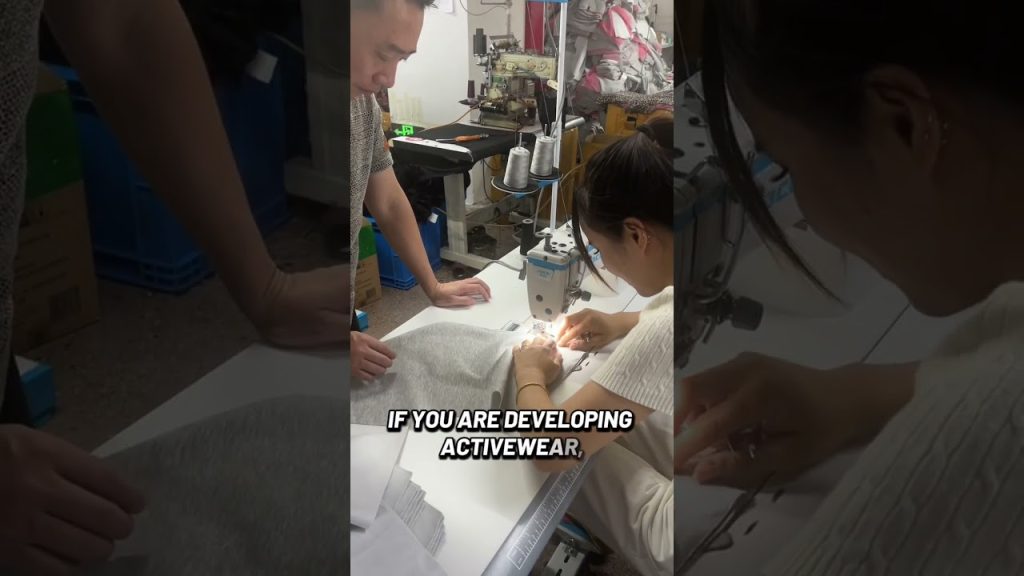
Watch the Factory-Visit Video
The video invites buyers to look beyond production equipment and review the decisions that protect an order before it leaves the factory.
A Real Production Example: One Design Upgrade Changed the Carton Plan
In one winter black fleece-lined wide-leg pants project for a US customer, the buyer requested a longer zipper at the leg opening. The change improved the product’s function and appearance, but it also increased the folded size.
The original carton specification was no longer suitable.
Instead of automatically selecting a much larger carton, the HF team reviewed the approved design, the new folded dimensions and the customer’s original order quantity. The carton height was adjusted by 2 cm so the upgraded garment could be packed correctly without creating unnecessary empty space.
The point is not the extra 2 cm itself. The value is recognizing that a product change can create a packaging and shipping consequence—and resolving it before the consequence becomes the buyer’s problem.
What a Product Change Can Affect
| Product change | Possible hidden risk | What the manufacturer should verify |
|---|---|---|
| Longer zipper or wider leg opening | Larger folded size | Folding method and inner-carton dimensions |
| Heavier or brushed fabric | More packing volume | Pieces per carton and compression risk |
| New padding or molded components | Shape damage | Protective packing and stacking direction |
| Added print, rhinestones or hardware | Surface abrasion | Tissue, polybag and layer protection |
| New size ratio | Uneven carton loading | Size assortment and carton breakdown |
| New retail packaging | Reduced carton capacity | Final packed dimensions and total carton count |
These checks help a brand see the true cost of a design decision before goods are ready to ship.
Packaging Optimization Is Production Risk Control
Packaging optimization does not mean forcing as many garments as possible into one carton. It means finding a packing method that protects the product while avoiding unnecessary transport volume and warehouse handling.
For bulk activewear production, HF reviews five connected factors:
- Approved product specification — The final design, fabric and trims must be clear before packing assumptions are finalized.
- Actual folded dimensions — Measurements should come from the approved garment, not an older style or an early estimate.
- Pieces per carton — The quantity must balance carton strength, product protection and handling practicality.
- Carton dimensions and weight — An oversized carton can waste space; an overloaded carton can deform or fail.
- Order and size breakdown — Packing records should support receiving, distribution and repeat orders.
Buyers can see the wider workflow in HF Garments’ guide to the bulk activewear production process from cutting to shipment.
How Packaging Supports Sample-to-Bulk Consistency
Sample-to-bulk consistency is not limited to fit and sewing. The buyer-approved product must also arrive in a condition that represents the approved standard.
A reliable handover should connect:
- the approved sample and tech pack;
- bulk fabric and trim approvals;
- cutting and sewing checkpoints;
- final measurements and appearance;
- folding instructions;
- polybag, labeling and carton requirements;
- records that can be reused for the next order.
HF’s sample-to-bulk leggings handover checklist explains the controls buyers should lock before production begins.
When these records remain connected, a reorder does not have to restart from memory. The factory can compare the next production run against the same approved standards.
What Buyers Should Verify During a Factory Visit
Do not ask only, “How many machines do you have?” Ask to see evidence of how the factory manages decisions.
Buyer Checklist
- [ ] Can the team show how the approved sample is transferred to bulk production?
- [ ] Are fabric standards and inspection results recorded before cutting?
- [ ] Are cutting, sewing and final QC checkpoints connected to the approved sample?
- [ ] Does the team review how design changes affect folding and carton dimensions?
- [ ] Are carton size, weight and quantity checked before shipment?
- [ ] Can the packing list be traced to sizes, colors and carton numbers?
- [ ] Are exceptions documented instead of handled through verbal instructions only?
- [ ] Can the same records support a repeat order?
If you are preparing a project, review HF Garments’ activewear product collections and bring your tech pack, reference sample, planned quantity and target market to the visit.
What Factory-Visit Evidence Builds Trust?
Machines show what a factory might be able to make. Records show whether it can repeat the approved result.
Useful evidence includes:
- approved samples with clear status;
- fabric inspection and approval records;
- measurement specifications and tolerances;
- in-line and final inspection records;
- actual folding and packing examples;
- carton marks and packing breakdowns;
- corrective-action records when a material or process does not meet the requirement.
This evidence helps buyers evaluate production control before placing a bulk order. It also gives both teams a clearer basis for communication when a style is reordered.
Frequently Asked Questions
1. What should an activewear buyer check during a factory visit in China?
Check approved sample control, fabric inspection, cutting and sewing QC, final inspection, folding instructions, carton specifications and packing traceability. Machines alone do not demonstrate that a supplier can repeat an approved product reliably.
2. Why should carton dimensions be reviewed before shipment?
Carton dimensions affect product protection, pieces per carton, total shipment volume and handling efficiency. A design or fabric change can make an old carton specification unsuitable, so the final packed garment should be checked before cartons are confirmed.
3. How can packaging optimization reduce unexpected costs?
Packaging optimization can reduce unnecessary empty space, repacking, damaged cartons, garment deformation and avoidable freight volume. It should balance protection, carton strength, handling and shipping efficiency rather than focus only on maximum compression.
4. How does packaging relate to sample-to-bulk consistency?
The bulk product must not only match the approved sample at inspection; it must also arrive in the expected condition. Folding, polybags, labels and cartons protect appearance and make the shipment traceable to the approved order requirements.
5. What information should a buyer bring to an activewear factory visit?
Bring the tech pack or reference sample, planned order quantity, size and color breakdown, target market, packaging requirements, delivery expectations and the unresolved risks you want the production team to review.
6. How can a factory prepare for reliable repeat orders?
A factory should retain approved product standards, fabric and trim references, measurement requirements, QC checkpoints, packing specifications and exception records. These records reduce repeated interpretation and help the next production run follow the same basis.
Plan a Production Review at HF Garments
HF Garments helps overseas brands connect product development with fabric control, bulk production, quality inspection and packaging decisions. A factory visit can be used to review your actual product and risks—not only to walk through a sewing floor.
Before visiting, send:
- product category;
- tech pack or reference images;
- expected quantity;
- target market;
- sample status;
- preferred visit date;
- packaging or shipping concerns.
Submit your project for a production review or contact HF Garments on WhatsApp: +86 19057430233
Bring your product questions. Leave with clearer production evidence.