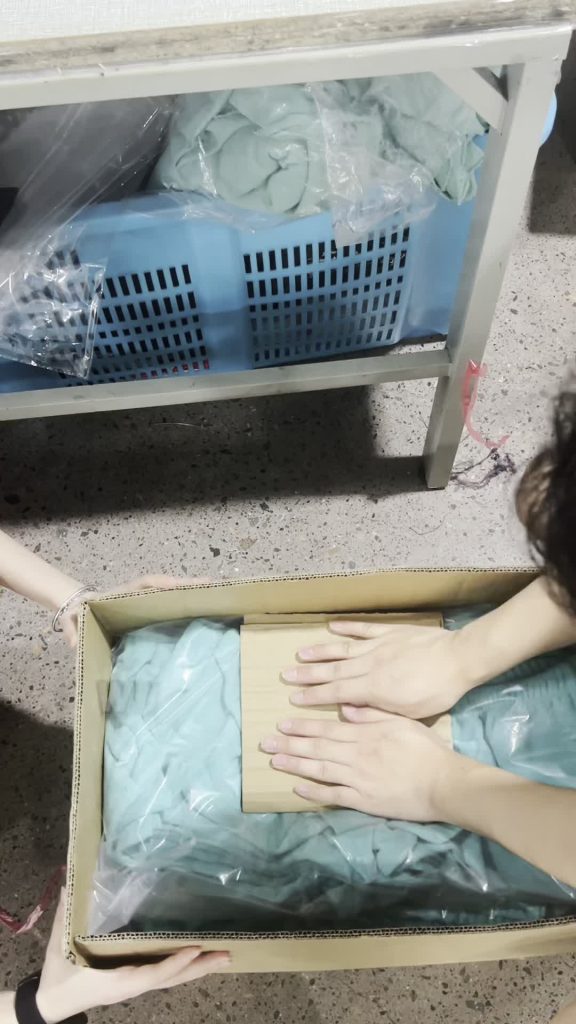



Before any bulk activewear order moves to the cutting table, every incoming fabric batch must pass two non-negotiable checks: GSM weight consistency and color matching against the approved standard. This article shows exactly how we inspect fabric for leggings, sports bras, and joggers — with two real cases from our factory floor.
Why Fabric Inspection Matters for Your Activewear Order
If you are sourcing bulk activewear — whether leggings, joggers, or sports bras — the quality of your finished product depends almost entirely on what happens before a single piece is cut. Fabric is the largest input cost in any apparel order, and inconsistent fabric can destroy an otherwise well-planned production run.
At HF Garments, we run fabric inspection on every incoming batch before production begins. This is not a spot-check. It is a systematic process that protects both the buyer and the factory from costly downstream problems.
Fabric inconsistency shows up in two primary ways: variation in weight (GSM) and variation in color. Both have direct consequences for your product.
The Fabric Inspection Process: Step by Step
Step 1: Compare Fabric Color with the Approved Standard
Every bulk order at HF Garments begins with an approved color standard — usually a lab dip or physical swatch signed off by the buyer. When the bulk fabric arrives, our QC team places it beside the approved standard under controlled lighting.
The question is not “does it look close enough?” The question is: “Does it match the approved standard within the tolerance set at the start of the order?”
Step 2: Randomly Select Fabric Rolls
From each delivery, we randomly sample rolls across the shipment — not just the first or last rolls. This ensures we are checking the batch, not cherry-picking the best examples.
For a typical activewear fabric delivery of 20-50 rolls, we will inspect 3-5 rolls selected randomly, plus any roll flagged during unloading for visual inconsistency.
Step 3: GSM Testing Using a Circular Fabric Cutter
GSM (grams per square metre) is the standard unit for fabric weight. For activewear, GSM directly affects fit, thickness, seam quality, and consistency across units. Our QC team uses a circular fabric cutter to punch uniform test samples from each selected roll. Each sample is weighed on a calibrated scale, and the result is recorded against the target GSM specified in the production order.
Step 4: Verify Fabric Weight Consistency Across Rolls
A single roll passing GSM does not mean the delivery is good. We check across multiple rolls to ensure the batch is consistent. If one roll is within tolerance but another falls outside, the entire batch is flagged for investigation.
Step 5: Reject Non-Conforming Batches Before Cutting
This is the most important step: if fabric fails inspection — whether on GSM or color — it is rejected before it reaches the cutting table. This decision is not negotiable. It stops problems at the source.
Real Case 1: Rib Fabric — GSM Passed, Color Failed
A recent bulk order called for rib fabric at a target of 230 GSM. When our QC team tested the incoming fabric:
- GSM result: Within acceptable range ✅
- Color comparison: Brighter than the approved standard ❌
Despite the GSM being correct, the fabric batch was rejected and returned to the supplier. In activewear, color consistency matters across your entire product line — a single shade that is brighter than standard would be noticeable when a customer compares two units side by side.
Lesson for buyers: GSM passing does not guarantee a fabric batch is acceptable. Color consistency is equally important.
Real Case 2: Dark Grey Fabric — GSM Below Specification
Another order called for dark grey fabric at a target of 200 GSM. The inspection result: Target 200 GSM, actual approximately 180 GSM.
A 20 GSM difference may not sound large, but in activewear it presents real risks:
- Thickness: The fabric would be thinner than intended, affecting compression and support — especially in leggings and sports bras
- Fit: Garments cut from lighter fabric will fit differently than those at the specified weight
- Bulk consistency: Rolls at 180 GSM and others at 200 GSM would produce inconsistent sizing
Production using this batch was stopped immediately. The fabric was quarantined and the buyer was notified before any cutting began.
Lesson for buyers: A 10% deviation in fabric weight is significant. When sourcing bulk activewear, confirm with your manufacturer what GSM tolerance they accept and what happens when fabric falls outside that tolerance.
How Fabric Inspection Protects Your Activewear Order
When a manufacturer inspects every incoming fabric batch, your finished product will match what you approved at sampling stage. Fit, feel, and performance will be consistent across the entire order. You avoid the cost and delay of rejecting finished goods at final inspection.
For more on how we maintain consistency from sample to bulk production, see our guides on sizing consistency in bulk orders and color consistency from sample to bulk.
Questions to Ask Your Activewear Manufacturer About Fabric Inspection
- Do you inspect every incoming fabric batch before cutting?
- What is your GSM tolerance (e.g., ±5%)?
- Do you test color against the approved standard under controlled lighting?
- What happens if fabric fails inspection — is the batch returned or used with a discount?
- Will I receive the inspection report before production starts?
- Do you test fabric from multiple rolls in the same delivery, or just one?
Request a Production Review
If you are planning an activewear order and want to understand how fabric inspection, GSM testing, and production controls work for your specific products, contact us.
Phone / WhatsApp: +86 19057430233
Email: hf@haofenggarments.com
https://haofenggarments.com/