



Quick Summary
Color consistency in garment manufacturing starts long before bulk cutting begins. Color inconsistency between samples and bulk production is one of the most common frustrations for apparel buyers, especially when sourcing from overseas manufacturers. This article explains how a reliable custom clothing manufacturer manages color matching through a 4-stage process: standard color card retention, pre-production sample approval, in-production shade banding, and final inspection.
The Color Problem in Bulk Garment Production
Every apparel buyer knows the fear: you approved a lab dip, signed off on a pre-production sample, and then the bulk shipment arrives with fabric that looks off. Slightly too warm. Slightly too dull. Not quite the black you approved.
This isn’t just a visual issue — it’s a business problem. Inconsistent color means brand reputation damage, returns and markdowns, and lost time on re-production. The difference between a custom clothing manufacturer that delivers consistent color and one that doesn’t comes down to process, not luck.
Stage 1: Standard Color Card Management
Based at our production facility in Dongyang, Zhejiang, China, HF Garments specializes in bulk apparel manufacturing with rigorous color control systems. Our location in the heart of Zhejiang’s textile industry gives us direct access to premium fabric suppliers and skilled color-matching technicians.
The foundation of color consistency is a physical reference system. At HF Garments, every fabric color used in production has a corresponding master color card that is archived by order, date-stamped, and stored under controlled conditions away from direct sunlight.
When a customer requests a specific shade — whether it’s black for a polo, black for a t-shirt, or black for joggers — we pull the relevant color card and match against the incoming fabric before cutting begins. This ensures the same “black” looks consistent across different garment styles.
Stage 2: Pre-Production Sample (PP Sample) Approval
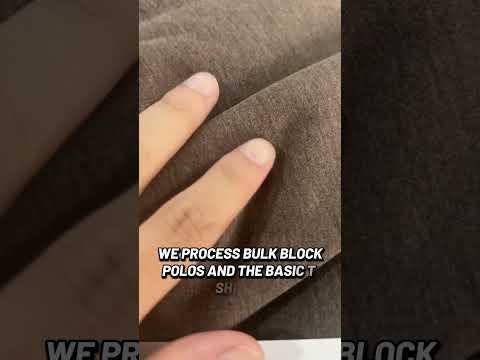
Before bulk cutting starts, a pre-production sample is produced using the actual fabric and trims that will be used in the full run. The PP sample serves as the final visual checkpoint between buyer and manufacturer. The sample is compared side-by-side against the approved color card, and any deviation is flagged before production begins.
Stage 3: In-Production Shade Banding
During bulk production, even fabric from the same dye lot can show minor shade variations. This is where shade banding becomes critical. Shade banding means cutting all garment pieces for a single unit from the same fabric ply, grouping fabric rolls by shade within the same batch, and labeling finished garments by shade group.
For example, if you order 10,000 units of black polo shirts, we ensure that any single carton contains garments cut from the same fabric roll — eliminating the “slightly different black” problem in multi-pack orders.
Stage 4: Final Inspection Before Shipment
Before any shipment leaves the factory, a QC team performs a final color check: random sampling from each production lot, comparison against master color card under standardized lighting (D65 daylight), and measurement using spectrophotometer for critical shades. If a garment fails, it’s flagged for re-production — not shipped and “hoped for the best.”
For international apparel buyers sourcing from China, choosing a Zhejiang-based garment manufacturer like HF Garments means access to established quality assurance infrastructure, experienced QC teams, and fabric mills that understand international color standards.
What This Means for Apparel Buyers
When evaluating a garment manufacturer for your bulk orders, ask these five questions:
- Do you archive color cards per order?
- How do you handle shade variation across fabric rolls?
- Can you show me your PP sample approval process?
- Do you use shade banding during cutting?
- What happens if color doesn’t match after bulk production?
For reliable color consistency garment manufacturing, look for a clothing manufacturer that can answer all five clearly — one that treats color matching as a system, not an afterthought. Factories in Zhejiang, China, like HF Garments, have built their quality systems around these principles.
Frequently Asked Questions
How do you match color across different fabric types?
Different fabric bases absorb dye differently. We develop separate lab dips for each fabric type and maintain independent color cards for cotton, polyester, cotton-poly blends, and other substrates.
What if I need a color match to a physical sample I already have?
Send us your physical sample. Our lab will spectrophotometer-read it and develop a lab dip for your approval before bulk production.
Can you match Pantone colors?
Yes. We work from Pantone references, physical swatches, or digital color codes. Each reference type has its own approval workflow.
How long does the color matching process take?
Lab dip development typically takes 3–5 business days. PP sample production adds another 5–7 days depending on fabric availability.
Do you charge extra for color matching?
Lab dip development is included in our sampling fee. There are no hidden charges for color matching on standard fabrics.
What happens if the color is wrong after bulk production?
If the finished goods don’t match the approved PP sample, we re-produce at our cost. This is why the PP sample approval stage exists — to catch issues before bulk commitment.
Ready to Start Your Bulk Production?
If you’re looking for a custom clothing manufacturer that takes color consistency seriously, we’d love to discuss your project. Tell us about your product, estimated quantity, target market, and customization requirements, and we’ll provide a detailed production plan with clear color matching milestones.
Or message us directly:
WhatsApp: +86 19057430233
Email: hf@haofenggarments.com
MOQ depends on product, fabric, color and customization requirements.

