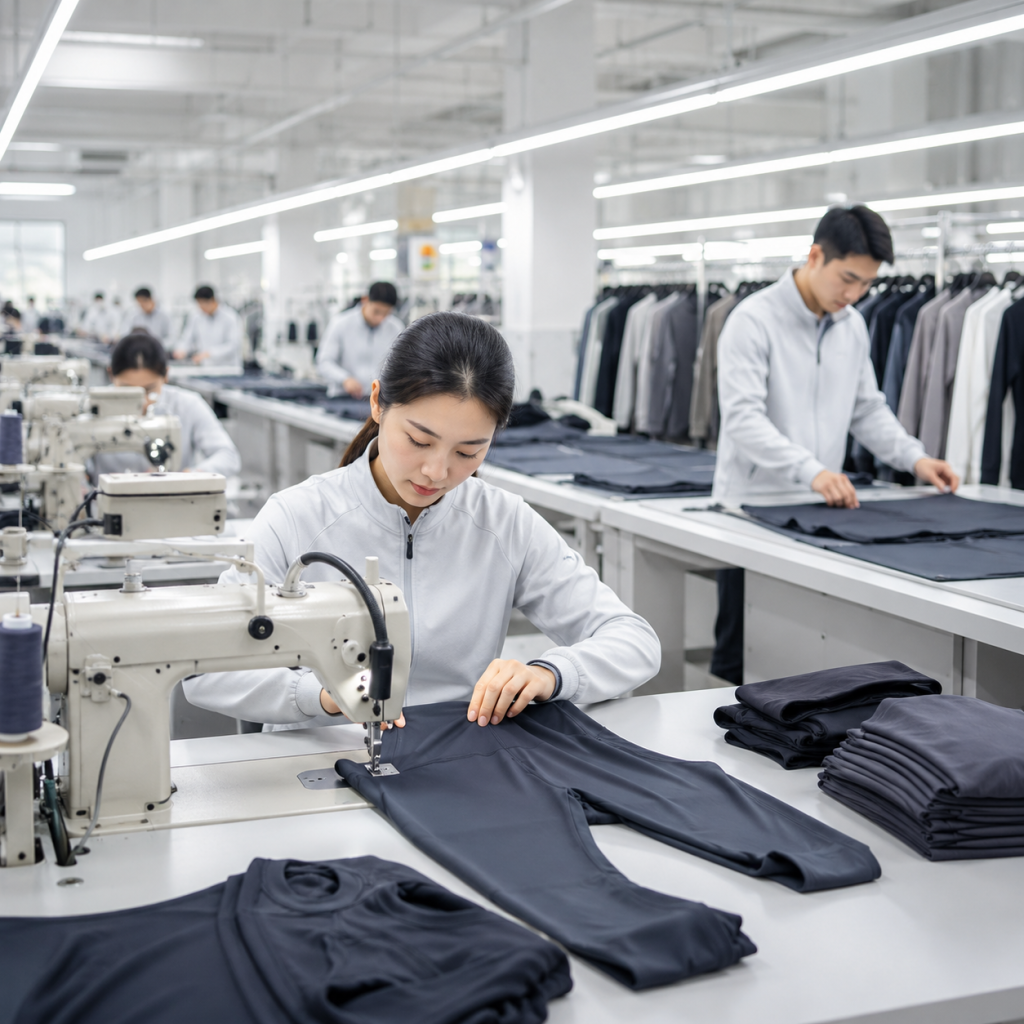



Real factory scale does not start at the sewing line. It starts in the fabric warehouse. A strong fabric warehouse system supports stable bulk order production because it keeps fabric traceable, easy to locate and ready for cutting before production pressure begins.
From the factory side, this is very clear. A sample can look good. A sewing line can look busy. A showroom can look clean enough for buyer photos. But bulk order production is different. The real test starts when many rolls, colors, sizes, cutting plans, QC checks, packaging details and shipment preparation have to move together without confusion.
For fashion brands, wholesalers, boutique buyers, TikTok Shop sellers and Amazon sellers, the question should not only be: can this clothing factory make a good sample? The better question is: can this factory repeat the same result across fabric rolls, dye lots, cutting tables, sewing lines, QC workflow and shipping workflow?
HF Garments is a clothing manufacturer in Dongyang, Zhejiang, China, helping fashion brands, activewear startups, boutique buyers, TikTok Shop sellers and Amazon sellers develop leggings, activewear, T-shirts, dresses and small-batch apparel samples for the US and European markets.
Why Fabric Warehouse Systems Matter for Stable Bulk Orders
For bulk apparel orders, fabric storage is not just a warehouse issue. It affects production planning, cutting preparation, QC consistency, packaging schedule and final shipment timing.
In large-scale apparel production, the fabric warehouse is where order discipline begins. If rolls are organized by fabric type, color, batch or order, the cutting team can prepare faster and with fewer mistakes. If fabric is hard to find or not clearly labeled, the delay moves into cutting, then sewing, then QC, then packing.
This is why buyers should look at the fabric warehouse system when judging apparel production capacity. It tells you whether the factory can support stable bulk production, not only whether it can make one nice sample.
Perfect for fashion brands, activewear startups & boutique buyers ✨
HF Garments (haofenggarments.com) supports leggings, activewear, T-shirts and dresses for buyers in the US and Europe.
Contact us for sample orders, bulk production support or factory videos.
WhatsApp: +86 19057940233
Email: hf@haofenggarments.com
#haofenggarments #hfgarments
Why Buyers Should Not Judge a Factory by Price Alone
Low price can save a few cents. Unstable production can cost a brand much more.
A quote does not show whether fabric rolls are separated by dye lot. It does not show whether the cutting team knows which batch belongs to which order. It does not show whether QC can trace a problem back to fabric, cutting, sewing or packing.
For US and European buyers, stable delivery is usually more valuable than the lowest first quote. A factory that controls fabric, planning, QC workflow and shipment preparation helps buyers avoid stock gaps, customer complaints and expensive rework.
Why a Good Sample Is Not Enough
A sample is important, but it is still a small test. One sample can be made carefully by one skilled worker using one selected fabric roll. Bulk production asks a harder question: can the factory control many rolls, many sizes, many colorways and many cartons without losing order discipline?
This matters especially for activewear, leggings, T-shirts and dresses, because fabric behavior affects fit, color, shrinkage, stretch, hand feel and final appearance. If the factory cannot control fabric before cutting, the best sample does not protect the bulk order.
From Fabric Storage to Shipment: The Bulk Order Stability Chain
Stable bulk production works like a chain. If one part is weak, the pressure appears later in the order.
- Fabric storage: keeps incoming fabric organized and protected before production starts.
- Roll management: helps the factory locate the right fabric roll quickly when cutting plans are ready.
- Dye-lot / batch control: reduces color difference risk across bulk order production.
- Cutting preparation: depends on correct fabric availability, roll labels and production planning.
- Sewing line planning: works better when cutting output is stable and fabric issues are solved early.
- QC workflow: becomes more consistent when fabric source, batch and production stage can be traced.
- Packaging workflow: needs production status, carton planning and order details to stay aligned.
- Shipment preparation: depends on finished goods, packing lists and timing being ready before the shipping deadline.
Real factory infrastructure is not only sewing machines. It is the system behind the sewing line that keeps fabric, cutting, QC, packaging and shipping connected.
What Goes Wrong When Fabric Management Is Weak
Many bulk order problems look like sewing or QC problems, but the source often starts earlier in fabric warehouse management.
- wrong fabric roll usage
- mixed dye lots
- fabric damage or pressure marks
- slow fabric locating
- cutting delays
- inconsistent bulk quality
- QC rework
- delayed packaging
- late shipment preparation
By the time these issues reach QC or packaging, the cost is already higher. That is why experienced buyers look upstream. They want to see whether the factory controls the order before sewing starts.
What Bulk Buyers Should Check Before Placing Orders
If you are checking a clothing factory for bulk orders, this buyer checklist can help you avoid suppliers that only look strong in the sample room.
- Can the factory show a real fabric warehouse?
- Are fabric rolls organized by fabric type, color, batch or order?
- Does the factory have a system for bulk fabric storage?
- How do they avoid wrong-roll usage and mixed dye lots?
- Can they show cutting, QC, packaging and shipping workflow?
- Can they explain MOQ, sample process, lead time and bulk production planning?
- Can they provide factory videos before production starts?
- Can they support repeat orders, not just one sample order?
This is not about asking difficult questions for the sake of it. It is about knowing whether the supplier has a working production system or only a good sales presentation.
How HF Garments Supports Stable Bulk Activewear Production
HF Garments uses organized fabric storage, production planning, QC workflow, cutting coordination, packaging workflow and shipment preparation to support stable bulk production for leggings, activewear, T-shirts and dresses.
For buyers who need private label clothing manufacturer support, sample development or repeat bulk orders, we focus on the practical work behind production: fabric roll control, industrial fabric handling, cutting coordination, QC workflow, packaging schedule and shipping workflow.
Buyers can also review our earlier guide on fabric warehouse systems in large clothing factories to understand why warehouse organization matters before large-scale apparel production begins.
You can also view this factory warehouse video here: HF Garments fabric warehouse video.
FAQ
Why does fabric warehouse management affect bulk order stability?
Because fabric storage affects roll locating, dye-lot control, cutting preparation, QC consistency, packaging schedule and shipment timing. Poor fabric management can create delays before sewing even starts.
How can buyers know if a clothing factory can handle large bulk orders?
Buyers should check the fabric warehouse, roll management, production planning, cutting workflow, QC process, packaging workflow and shipping preparation, not only the sewing machines or sample room.
Can HF Garments support stable bulk activewear production?
Yes. HF Garments supports stable bulk production for leggings, activewear, T-shirts and dresses through organized fabric storage, production planning, QC workflow, packaging and shipment preparation.
Do you support both sample orders and bulk orders?
Yes. HF Garments supports small-batch apparel samples, private label development and bulk order production for buyers in the US and European markets.
Can buyers see factory videos before placing an order?
Yes. Buyers can contact HF Garments to request factory videos, sample order details and production capacity information before starting a project.
Stable Delivery Is Better for Long-Term Buyers
For a one-time small order, some buyers may accept more risk. For a brand that wants repeat orders, wholesale supply, Amazon inventory or TikTok Shop restocking, stable delivery matters more.
A stable clothing factory helps you plan launches, avoid stock gaps, keep product quality consistent and protect customer trust. That value does not always show in the first quote, but it shows over several orders.
Perfect for fashion brands, activewear startups & boutique buyers ✨
HF Garments (haofenggarments.com) supports leggings, activewear, T-shirts and dresses for buyers in the US and Europe.
Contact us for sample orders, bulk production support or factory videos.
WhatsApp: +86 19057940233
Email: hf@haofenggarments.com
#haofenggarments #hfgarments